SEO
Why Does My Website Get Traffic but No Customers? 12 Reasons & How to Get More Leads
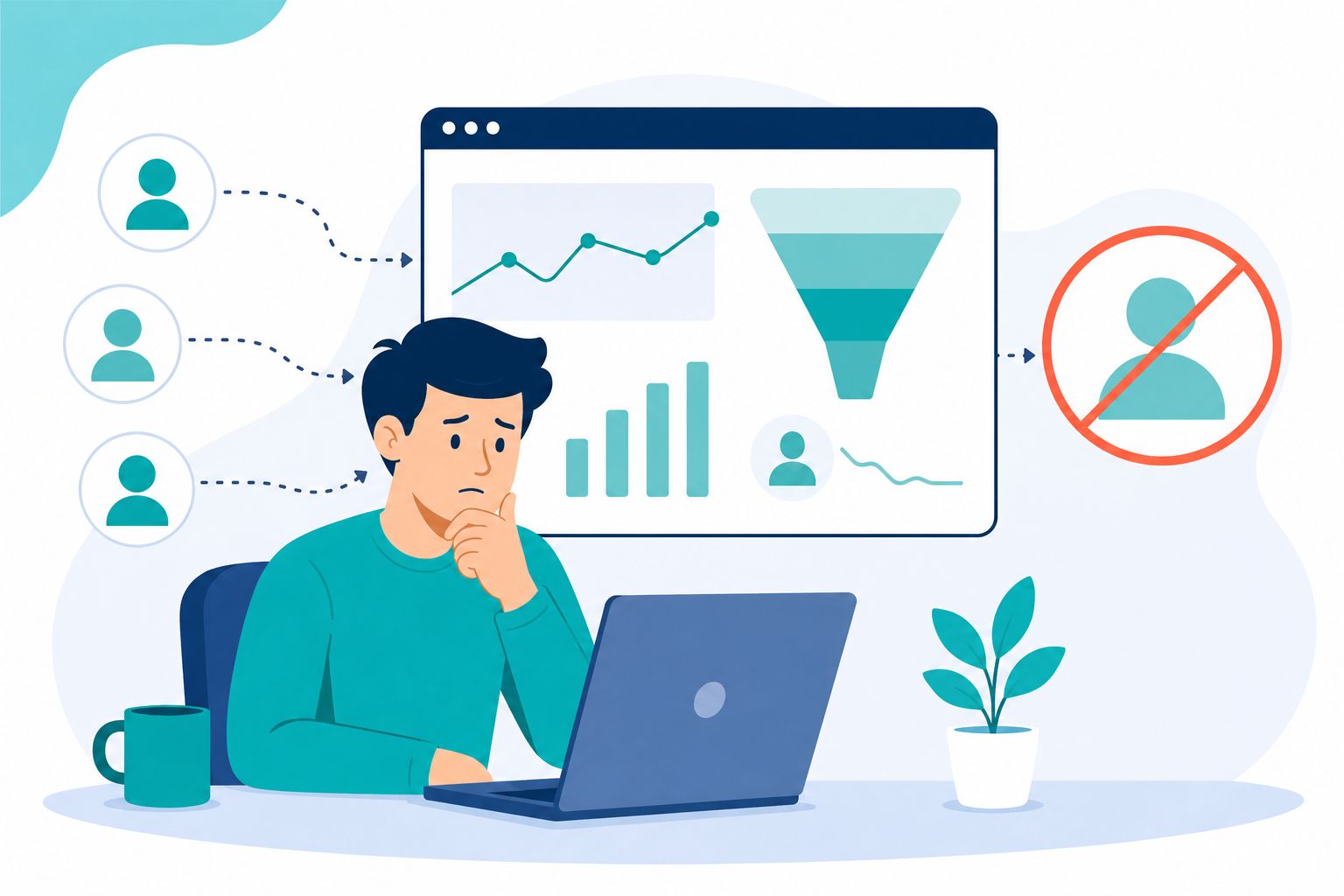
You open Google Analytics and see that your website traffic is increasing.
Google Search Console shows more impressions and clicks.
But when you check your actual business results:
- Your WhatsApp is quiet
- Contact form submissions are low
- Phone calls have not increased
- Quotation requests are still low
- New customers have not increased
So you start asking:
"Why does my website get traffic but no customers?"
This is actually a very common problem.
And the answer is not necessarily that you need more traffic.
Traffic and leads are two different things.
You could have:
5,000 visitors → 10 enquiries
while another website could have:
1,000 visitors → 50 enquiries
The second website has less traffic but generates more business opportunities.
That is why the goal of a business website should not simply be to attract visitors.
The goal is to attract the right visitors and help them take action.
In this guide, we will look at 12 reasons why a website gets traffic but no customers and what you can do to improve your lead generation.
Traffic Is Not the Same as Customers
This is the first concept to understand.
Traffic simply means people are visiting your website.
A lead means someone has taken an action that indicates interest in your product or service.
For example:
- WhatsApp enquiry
- Phone call
- Contact form submission
- Quotation request
- Booking
- Registration
- Purchase
A customer is someone who ultimately buys your product or service.
| Metric | Meaning |
|---|---|
| Traffic | People who visit your website |
| Lead | Someone who shows interest or makes an enquiry |
| Customer | Someone who purchases or uses your service |
So when traffic increases but leads do not, you may have a conversion problem rather than a traffic problem.
12 Reasons Your Website Gets Traffic but No Customers
1. Your Traffic Is Coming From the Wrong People
Not all traffic has the same value.
Imagine that you run a web design company in Penang.
Your website might receive traffic from searches such as:
- free website template
- website tutorial
- HTML coding tutorial
But the people you actually want are searching for:
- web design Penang
- website design Malaysia
- website for small business
You could therefore receive plenty of visitors but very few enquiries.
This is a traffic quality problem.
More traffic does not automatically mean more customers.
2. Search Intent Does Not Match Your Offer
This is closely related to traffic quality.
Imagine someone searches:
"What is SEO?"
and reads your article.
Are they ready to buy SEO services?
Maybe not yet.
Now consider someone searching:
"SEO company Penang"
That person may have much stronger commercial intent.
Your website should therefore distinguish between:
- Informational intent
- Commercial investigation
- Transactional intent
Blog articles can attract people who are still researching.
Service pages and landing pages should help capture visitors who are closer to making a purchase decision.
3. Visitors Do Not Understand What You Offer
Within the first few seconds, visitors should be able to understand:
- Who are you?
- What do you offer?
- Who do you help?
- Why should they choose you?
For example:
"We provide web design."
is too general.
A clearer version could be:
"Web Design Malaysia for SMEs — Professional, Mobile-Friendly and SEO-Ready Websites."
Visitors should not have to guess what your business does.
4. Your Call to Action Is Not Clear
You may have a beautiful website but visitors do not know what they should do next.
Clear CTAs can include:
- Get a Quote
- WhatsApp Us
- Book a Consultation
- Request Pricing
- Get a Free Consultation
Compare:
"Submit"
with:
"Request a Website Quote"
The second CTA gives the visitor much more context.
5. WhatsApp or Contact Information Is Difficult to Find
For many Malaysian SMEs, customers are comfortable starting a conversation through WhatsApp.
If visitors have to search around your website to find a phone number or contact page, some may simply leave.
Make sure:
- WhatsApp is easy to find
- Your phone number is clear
- Email is available where relevant
- Your contact form is easy to use
Mobile visitors in particular should be able to contact you without having to search through several pages.
6. Your Website Does Not Give Visitors a Reason to Trust You
Imagine that you are a potential customer who has never heard of the company before.
You discover the website through Google.
What would make you trust the business?
Examples include:
- Portfolio
- Testimonials
- Customer reviews
- Company information
- Project case studies
- Years of experience
- Professional credentials
- Real business address
- Clear contact information
If the website only says:
"We are the best company."
but provides no evidence, potential customers may remain unconvinced.
7. Your Website Is Too Slow
Visitors do not like waiting for websites to load.
A slow website can cause visitors to leave before they even see your offer.
Common causes include:
- Oversized images
- Too many scripts
- Third-party widgets
- Unoptimised code
- Heavy videos
- Unsuitable hosting
Website speed matters not only for SEO but also for user experience and conversion.
8. Your Website Looks Good but Is Not Designed for Conversion
This is a very common problem.
A website may have:
- Animations
- Large hero images
- Modern graphics
- Beautiful typography
but lack:
- A clear offer
- A strong CTA
- Social proof
- An easy enquiry process
A visually attractive website does not automatically become a website that generates customers.
Design should support the business objective.
9. Your Enquiry Form Is Too Long
If you ask visitors to complete:
- Full name
- Address
- Phone number
- Company
- Position
- Budget
- Industry
- Project details
before they can submit an enquiry, some visitors may abandon the form.
For an initial contact, you may only need:
- Name
- Phone / WhatsApp
- Short enquiry
You can collect additional information after the conversation begins.
10. Your Website Is Not Mobile-Friendly
Many customers use smartphones to search for businesses.
If the mobile experience is poor, conversion can suffer even when traffic is high.
Check:
- Are buttons easy to tap?
- Is the text easy to read?
- Is WhatsApp easy to access?
- Is the form easy to complete?
- Is navigation simple?
- Does the page load quickly?
11. You Are Not Tracking the Real Conversions
This is another important issue.
You may look at:
10,000 visitors
and assume your website is performing well.
But you may not be tracking:
- WhatsApp clicks
- Phone calls
- Contact forms
- Bookings
- Quotation requests
Without proper conversion tracking, you may not know how well your website is actually performing.
This is particularly important for Malaysian businesses because visitors may click WhatsApp and leave the website immediately. If the event is not being tracked, your analytics may show traffic without accurately showing the enquiries generated. Good conversion tracking should therefore measure the actual actions that matter to your business.
12. Your Website Does Not Address Customer Doubts
Many customers do not purchase immediately after landing on a website.
They may be wondering:
- How much does it cost?
- Can I trust this company?
- Do they have experience?
- Do they have a portfolio?
- How long does the process take?
- What areas do they serve?
- What is included in the package?
- What happens after I contact them?
A website that clearly answers these questions can make it easier for visitors to move towards a decision.
How Do You Know Whether the Problem Is Traffic or Conversion?
Use this simple diagnosis.
| Situation | Likely Problem |
|---|---|
| Low traffic | SEO / marketing / search demand |
| High but irrelevant traffic | Keyword / audience targeting |
| Relevant traffic but no enquiries | Conversion / UX / trust |
| Many enquiries but poor quality | Offer / targeting / qualification |
| Many enquiries but few sales | Sales process / pricing / follow-up |
This diagnosis matters because each problem requires a different solution.
Do Not Simply Buy More Traffic
This is one of the most expensive mistakes a business can make.
Imagine your website currently produces:
1,000 visitors → 5 leads
You increase your traffic to:
2,000 visitors → 10 leads
You have not actually fixed the conversion problem.
You have simply doubled the traffic going through the same system.
Before increasing your advertising or SEO budget, review:
- Messaging
- Offer
- CTA
- Trust
- Mobile experience
- Page speed
- Enquiry process
How to Increase Leads From Your Existing Traffic
1. Improve Your Headline
Your headline should communicate the value to the customer.
Instead of:
"Welcome to ABC Company"
consider:
"Professional Renovation Services in Penang for Homeowners and Businesses"
2. Add a Clear Call to Action
Make sure visitors know what they should do next.
For example:
- Request a Quote
- WhatsApp Now
- Book a Site Visit
- Get Pricing
3. Place Trust Signals Where They Matter
Do not hide testimonials at the very bottom of your website.
If you have:
- Project portfolio
- Reviews
- Business experience
- Certifications
show them at points where they help the customer make a decision.
4. Simplify the Contact Process
Do not force customers to complete a long form if all you really need initially is a WhatsApp number.
5. Add an FAQ Section
FAQs can help address common objections.
For example:
- How much does it cost?
- How long does it take?
- Which areas do you cover?
- How does the quotation process work?
6. Use Dedicated Landing Pages
If you are running Google Ads or a specific marketing campaign, do not automatically send all traffic to the homepage.
Use a landing page that matches the offer and search intent.
For more information, read:
Landing Page vs Website: Which Is Better for a Small Business?
7. Provide Pricing Guidance Where Appropriate
You do not necessarily need to publish fixed prices.
But you can provide:
- Starting prices
- Estimated ranges
- Package information
- Factors that affect pricing
This can help potential customers determine whether your service is suitable for their budget.
8. Add Case Studies
Case studies can show:
- The customer's problem
- The solution
- The process
- The result
This can be more convincing than simply saying:
"We have extensive experience."
How to Measure Website Conversion
One simple formula is:
Conversion Rate = Leads ÷ Website Visitors × 100
For example:
1,000 visitors
↓
30 leads
30 ÷ 1,000 × 100 = 3%
However, do not become obsessed with a single benchmark because every industry has a different customer journey, buying cycle and traffic mix.
Use benchmarks as context, but focus primarily on your own data and whether the traffic and leads are actually valuable to your business.
Which Website Conversions Should You Track?
Do not only track contact form submissions.
For Malaysian SMEs, consider tracking:
- WhatsApp clicks
- Phone clicks
- Contact form submissions
- Quotation requests
- Bookings
- Email clicks
- Purchases
You can also separate:
- Qualified leads
- Unqualified leads
- Actual customers
This provides a much more accurate picture of your website's business performance.
Example: Web Design Company
Imagine a web design company receives:
2,000 visitors per month.
But it generates:
- 10 WhatsApp conversations
- 5 contact form submissions
- 3 phone calls
Total:
18 enquiries
If five of those enquiries become customers, this is much more useful information than simply saying:
"We receive 2,000 visitors."
The real objective is the entire marketing and sales funnel.
Example: Renovation Company
A renovation company may receive visitors searching for:
"renovation contractor Penang"
If the page immediately shows:
- Project photos
- Customer reviews
- Service areas
- Project types
- Quotation CTA
the visitor can quickly understand what the company offers and what to do next.
This is an example of SEO, content, website design and conversion working together.
Website Conversion Is Not Only a Design Problem
When a website does not generate customers, do not immediately blame the colour scheme or typography.
Review the entire funnel:
Search
↓
Traffic Quality
↓
Message
↓
Trust
↓
Offer
↓
CTA
↓
Enquiry
↓
Sales
The problem can happen at any stage of the journey.
How Does SEO Affect Website Conversion?
SEO is not only about rankings.
The keywords you target influence the type of people who arrive on your website.
For example:
"What is website design?"
is very different from:
"Website design company Penang"
The second search is much closer to a commercial decision.
That is why search intent should be part of your SEO strategy.
You can also read:
How Does Google Ads Affect Conversion?
Google Ads can bring traffic quickly.
But if that traffic is sent to the wrong page, you may waste your advertising budget.
For example:
Ad: Website Design for Small Businesses
↓
Landing Page: A homepage with 20 navigation options and many unrelated messages
This may be less effective than:
Ad: Website Design for Small Businesses
↓
Landing Page: SME website package + portfolio + pricing + WhatsApp
For more information about SEO and Google Ads, read:
SEO vs Google Ads in Malaysia: Which Is More Worth It?
Can a Website Redesign Help?
Yes, but a redesign is not automatically the answer.
A redesign can be useful when the problem is caused by:
- Outdated design
- Poor mobile UX
- Weak navigation
- Unclear messaging
- Old technology
- Weak conversion structure
If the real problem is irrelevant traffic, redesigning the website alone will not solve it.
For more information:
Website Redesign Malaysia: When Is the Right Time to Redesign Your Website?
10-Minute Website Conversion Audit
You can perform a simple audit yourself.
Step 1
Open your website on a smartphone.
Step 2
Ask:
"Can I understand what this website offers within five seconds?"
Step 3
Find the WhatsApp or contact button.
How long did it take you to find it?
Step 4
Look at the portfolio.
Can potential customers see real evidence of your work?
Step 5
Read the headline.
Is it focused on the customer or only describing the company?
Step 6
Try completing the enquiry form.
Is the process simple?
Step 7
Read the FAQ section.
Does it answer the main questions your customers are likely to have?
A simple audit like this can reveal problems that may not be obvious when you look at your website every day.
Checklist for a Website That Generates More Leads
- Clear headline
- Clear offer
- Relevant traffic
- Strong CTA
- WhatsApp button
- Easy contact form
- Mobile-friendly design
- Fast loading
- Testimonials
- Portfolio
- Case studies
- FAQ
- Pricing guidance where appropriate
- Service pages
- Clear business information
- Conversion tracking
Conclusion
If your website gets traffic but no customers, do not automatically assume that you need more traffic.
You may actually have a conversion problem.
Check:
- Is your traffic coming from the right audience?
- Does the search intent match your offer?
- Can visitors quickly understand what you offer?
- Is your CTA clear?
- Does your website have trust signals?
- Is the mobile experience good?
- Does the website load quickly?
- Is the contact process simple?
- Are you tracking WhatsApp and phone enquiries?
More traffic is not always the answer.
Sometimes it is more valuable to increase the number of customers generated from the traffic you already have.
Traffic brings people to your website. Conversion helps bring customers to your business.
Frequently Asked Questions
Why does my website get traffic but no customers?
Possible causes include irrelevant traffic, poor search intent targeting, unclear offers, weak CTAs, lack of trust, slow page speed, poor mobile experience or a difficult enquiry process.
Do I need more website traffic?
Not necessarily. If your website already receives relevant traffic but generates very few enquiries, improving the website's conversion path may be more valuable before increasing your marketing budget.
What is a good website conversion rate?
There is no single conversion rate that applies to every industry. It depends on the business model, price, traffic source, customer journey and how conversions are measured. Use benchmarks as context, but prioritise your own website data.
Can WhatsApp be counted as a website conversion?
Yes. For many Malaysian businesses, a WhatsApp conversation can be an important conversion. Make sure WhatsApp clicks are tracked through your analytics setup so you do not only measure contact form submissions.
Can redesigning a website increase leads?
It can, if the redesign solves actual problems such as messaging, mobile UX, navigation, speed, trust and calls-to-action. However, redesigning a website alone does not guarantee more leads.
Can SEO help a website generate more customers?
SEO can help bring more relevant organic traffic. However, that traffic still needs to arrive on a website that is clear, trustworthy and designed to convert visitors into enquiries.
Is Google Ads better than SEO for getting customers?
It depends on your goals. Google Ads can provide visibility more quickly, while SEO can build long-term organic visibility. In both cases, the quality of the website and landing experience plays an important role.
How do I know whether my problem is traffic or conversion?
Check whether visitors are coming from relevant keywords and audiences. If your traffic is relevant but enquiries are low, the problem may be conversion. If the traffic itself is irrelevant, the problem may begin with keyword targeting or your marketing channel.
Want a Website That Does More Than Get Traffic?
A good business website should do more than attract visitors.
It should help visitors understand your business, build confidence and take action.
Nibong Web Studio helps Malaysian SMEs build websites that are not only mobile-friendly and SEO-ready, but also structured to support lead generation and enquiries.
If you are planning a new website or want to improve your existing one:
View Website Packages & Pricing
Ready to build your website?
Tell us about your business and we will recommend the right package.