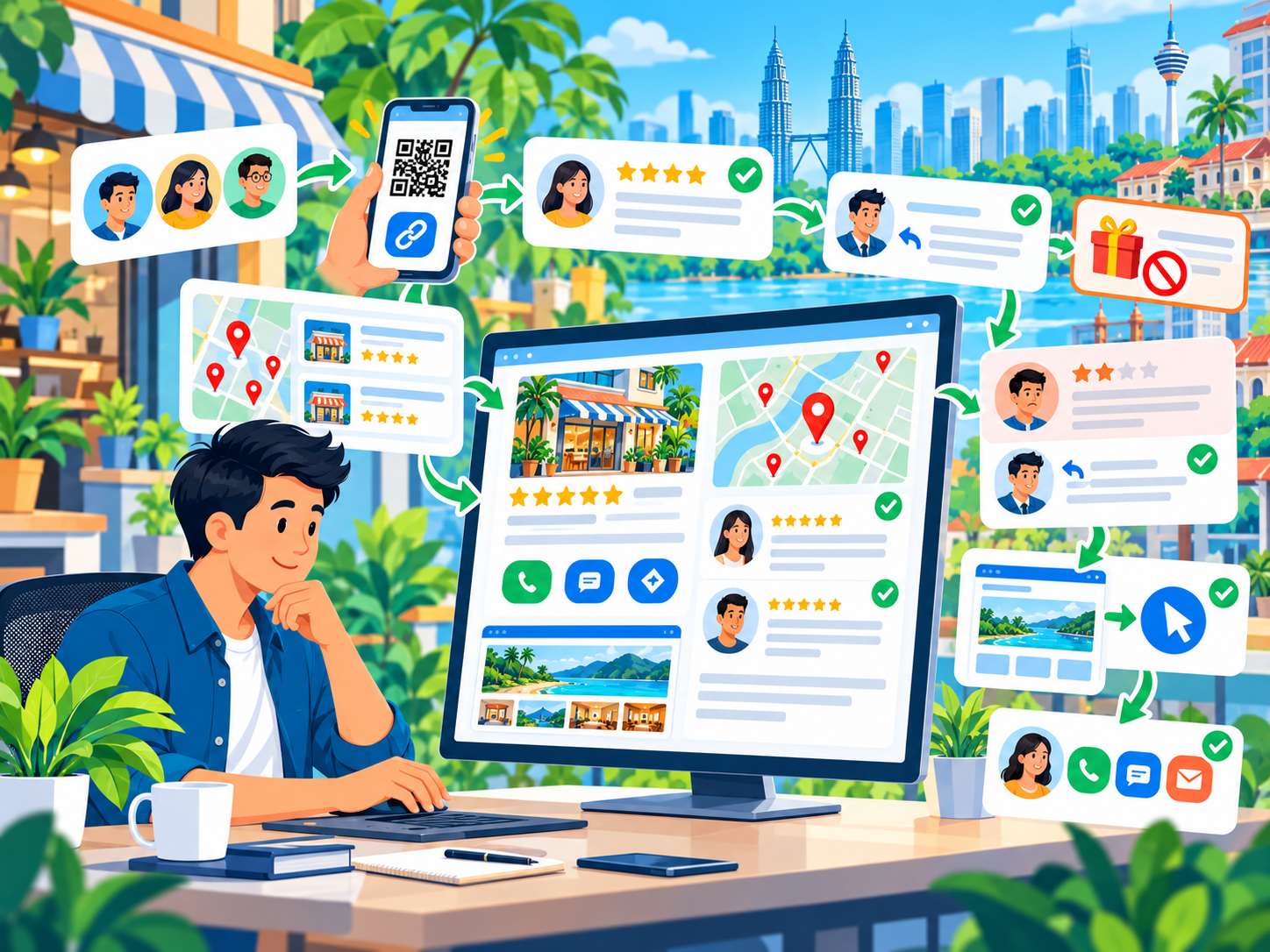
Website Guides
Website for Tourism & Homestay Businesses in Malaysia: How to Get More Bookings & Enquiries
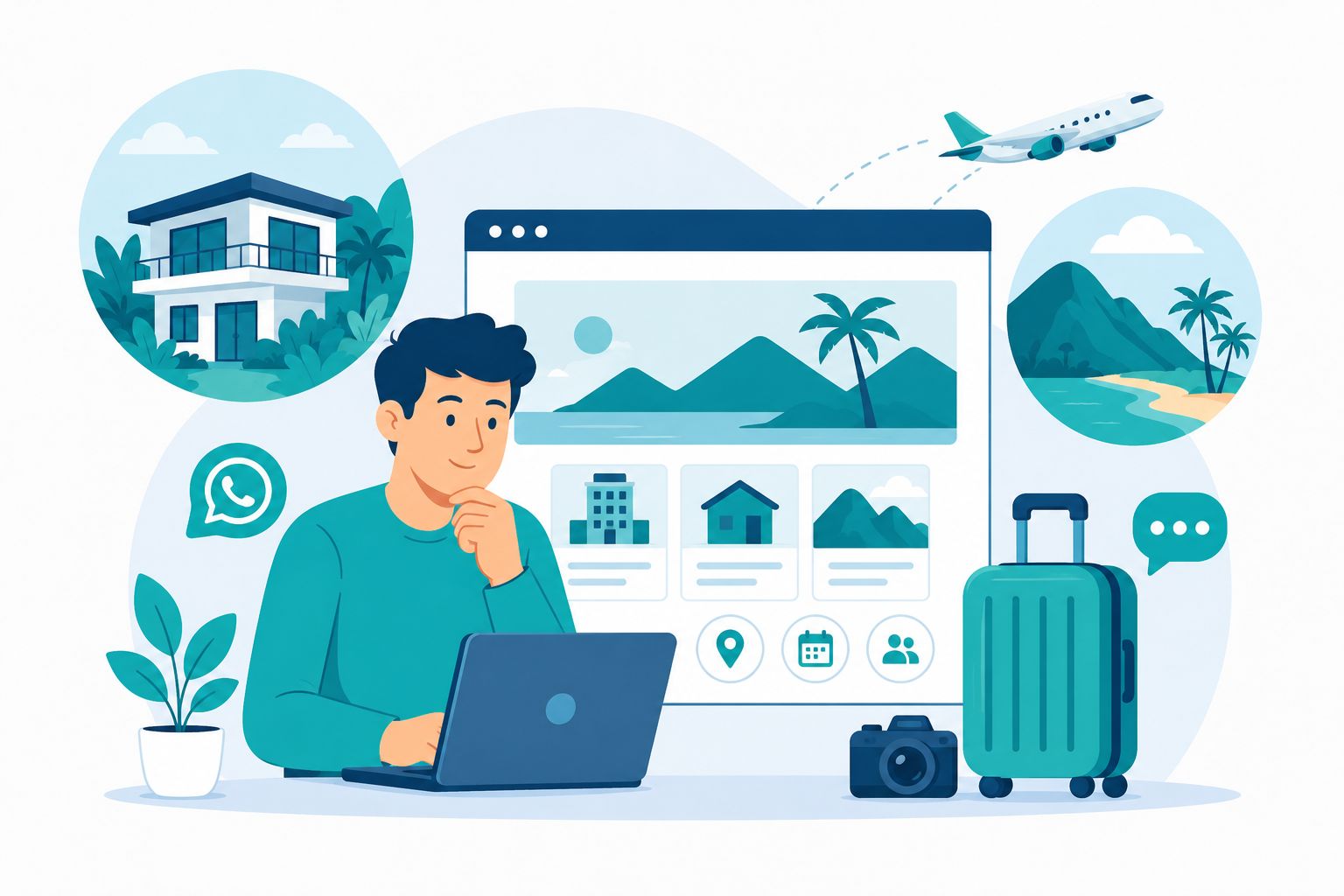
When someone is planning a trip, holiday or accommodation in Malaysia, the research process often starts online.
They may search for:
- Destinations
- Tour packages
- Activities
- Homestays
- Hotels or accommodation
- Private tours
- Family trips
- Company trips
- Local experiences
They may use Google Search, Google Maps, TikTok, Instagram, Facebook, OTAs or travel marketplaces before making a decision.
After that, they want answers to practical questions such as:
- What is included?
- How much does it cost?
- How many days?
- When is it available?
- Where is it located?
- What will I get?
- Is this suitable for families?
- Can I contact you on WhatsApp?
- How do I make a booking?
This is why a travel website Malaysia, tourism website Malaysia or homestay website Malaysia should be designed to help customers make decisions, not simply display attractive photographs.
A good website can become the centre of the customer journey:
Search → Destination / Property → Information → Trust → Enquiry → Booking
In this article, we look at how to build a website for tourism and homestay businesses in Malaysia, including tour packages, itineraries, accommodation, locations, WhatsApp, booking, Local SEO, Google Maps, mobile experience and content strategies that can help attract more enquiries.
Why Do Tourism and Homestay Businesses Need a Website?
Social media is excellent for attracting attention.
Travel platforms and OTAs can also help people discover destinations or accommodation.
However, your own website gives you a dedicated space where you control how your information is presented.
For example, a website can bring together:
- Destination information
- Tour packages
- Itineraries
- Accommodation details
- Photos
- Prices
- Availability
- Reviews
- Location information
- Booking information
It can also help someone who has never heard of your business understand who you are before making a booking.
Tourism Website vs OTA and Travel Platforms
Your website does not necessarily need to replace Booking.com, Agoda, Klook, travel portals or other platforms.
Each channel serves a different purpose.
| Aspect | OTA / Travel Platform | Your Own Website |
|---|---|---|
| Existing audience | Yes | Needs to be built |
| Brand control | Limited by the platform | Greater control |
| Package presentation | Based on platform format | Can be customised |
| SEO content | Limited | Can be developed |
| Customer journey | Platform dependent | Can be customised |
| Direct enquiries | Depends on platform | Can go directly to WhatsApp or forms |
| Business information | Limited to platform space | Can be presented comprehensively |
So the practical approach is not necessarily:
Website or travel platform.
Instead, it can be:
Website + Google + Social Media + Travel Platforms + WhatsApp.
Types of Tourism Businesses That Can Benefit From a Website
Every tourism business has different requirements.
A website can be useful for:
- Travel agencies
- Tour operators
- Tour guides
- Destination management companies
- Homestay operators
- Villa operators
- Guesthouses
- Adventure tour providers
- Island tour operators
- Local experience providers
- Transport and tour businesses
Do not use exactly the same website structure for every type of business.
1. Your Homepage Should Immediately Explain What You Offer
Your homepage should answer several important questions within the first few seconds:
- Who are you?
- What do you offer?
- Where do you operate?
- Who do you serve?
- What should the visitor do next?
For example:
Penang Island Tours, Local Experiences & Private Trips
or:
Homestay in Langkawi for Families, Couples & Groups
Use positioning that accurately represents your actual business.
2. Destination Pages Can Be Very Useful for Travel Businesses
If you offer trips to several destinations, avoid putting every destination into one extremely long page.
You can create dedicated pages for destinations such as:
- Penang
- Langkawi
- Redang
- Perhentian
- Cameron Highlands
- Malacca
- Kota Kinabalu
Each destination page can explain:
- What makes the destination interesting
- Activities
- Who it is suitable for
- Best time to visit
- Tour packages
- Accommodation options
- Travel information
- How to enquire
Only create destination pages for places you genuinely serve.
3. Tour Package Pages Should Provide Complete Information
If you sell tour packages, important packages can have dedicated pages.
For example:
- Package name
- Destination
- Duration
- Price
- Departure information
- Itinerary
- What's included
- What's excluded
- Accommodation
- Transport
- Activities
- Booking information
This structure also makes it easier to share a specific package with customers instead of sending a long poster image through WhatsApp.
4. Don't Put the Itinerary Only in a PDF
A PDF can still be useful as an additional resource.
However, important itinerary information should also be easy to read directly on the website.
For example:
Day 1
Arrival, transfer and check-in.
Day 2
Island tour and selected activities.
Day 3
Free time and departure.
A structure like this makes it easier for customers to understand what they will experience before asking further questions.
5. Display Prices Clearly When Appropriate
Price is an important factor in travel decisions.
If your prices are fixed, display them clearly.
If prices change based on factors such as:
- Travel date
- Number of travellers
- Room type
- Vehicle type
- Tour duration
- Season
explain those factors clearly.
Do not display prices that are no longer applicable.
6. Explain What Is Included and Excluded
One of the common questions customers have when considering a travel package is:
"What is included?"
There is no need to force customers to ask through WhatsApp if the information can be provided directly on the website.
Included
- Accommodation
- Transport
- Entrance fees
- Selected meals
- Tour guide
Not Included
- Travel insurance
- Personal expenses
- Optional activities
- Additional meals
Use lists that accurately reflect the actual package.
7. WhatsApp Can Be Part of the Booking Journey
Many customers may not be ready to make a payment immediately.
They may want to ask questions first.
For example:
- Is this package available on my date?
- Can you arrange a private tour?
- Do you have family rooms?
- Can you customise the itinerary?
If WhatsApp is one of your enquiry channels, make the button easy to find.
You can also use a pre-filled message such as:
Hi, I am interested in the Langkawi package for 4 people in December.
This can help your staff understand the enquiry more quickly.
8. A Homestay Website Should Sell the Experience, Not Just the Room
For a homestay, customers may not simply be buying a place to sleep.
They may also be buying an experience.
For example:
- Location
- Privacy
- Family-friendly environment
- Local experience
- Nature
- Village experience
- Nearby attractions
Tourism Malaysia describes its Homestay Experience Programme in terms of community life, culture and local hospitality. If your homestay genuinely offers experiences like these, explain them clearly on your website. ([tourism.gov.my](https://www.tourism.gov.my/niche/homestay?utm_source=chatgpt.com))
9. Present Your Rooms or Property Clearly
Each accommodation option should provide enough information for customers to compare their choices.
For example:
- Room type
- Maximum guests
- Bedrooms
- Bathrooms
- Beds
- Facilities
- Air-conditioning
- Wi-Fi
- Parking
- Kitchen facilities
- Check-in and check-out information
Only list facilities that are actually available.
10. Use Real Homestay Photos
Photos are extremely important for a homestay.
Use real photographs of:
- Exterior
- Living room
- Bedrooms
- Bathrooms
- Kitchen
- Facilities
- Parking
- Outdoor spaces
- Nearby attractions
Avoid using stock photography that could make customers believe they will receive something that does not actually exist.
11. Location Is One of the Main Selling Points
Travel customers depend heavily on location information.
Your website should explain:
- Exact location
- Nearest attractions
- Distance from the airport
- Distance from ferry terminals where relevant
- Nearby restaurants
- Nearby attractions
- Parking
- Transport options
Do not simply write:
"Located in a strategic location."
Explain why the location is convenient or strategically located.
12. Google Maps Is Important for Local Tourism Businesses
If customers need to visit your property or business location, Google Maps should be easy to find.
Your website can provide:
- Address
- Map
- Directions
- Nearby landmarks
- Parking information
For a guide to Google Maps for Malaysian businesses:
How to Register Your Business on Google Maps in Malaysia
13. Google Business Profile for Travel and Homestay Businesses
If your business is eligible for a Google Business Profile, make sure the information displayed is accurate.
Check:
- Business name
- Category
- Address
- Phone
- Website
- Opening hours
- Photos
- Reviews
For more information:
Google Business Profile Malaysia: 15 Ways to Optimise Your Profile for More Customers
14. Reviews Are Important in the Travel Industry
Travellers may never have heard of your business before.
They therefore look for evidence that other people have used your service.
Use genuine:
- Customer reviews
- Guest feedback
- Traveller photographs where permission is available
- Relevant testimonials
Do not create fake testimonials.
If you have genuine reviews, present them in a way that helps prospective customers understand the actual experience.
15. Show What Makes Your Business Different
If every travel business says:
"Best Service"
customers have no clear reason to choose one business over another.
Explain your genuine differentiators.
For example:
- Private tours
- Small group experiences
- Local guides
- Family-focused packages
- Custom itineraries
- Unique homestay experiences
- Specific destination expertise
Only use USPs that genuinely apply to your business.
16. Build Your Website for Mobile Users
Travel research is often performed on smartphones.
A visitor may be:
- Travelling
- Waiting for a flight
- Researching from a hotel
- Discussing a trip with family
Your website therefore needs to be easy to use on mobile devices.
Check:
- Navigation
- Tour cards
- Property photos
- Itineraries
- Booking buttons
- Maps
- Forms
17. Website Speed Matters
Travel websites often contain many destination and accommodation photographs.
This can make pages heavy.
Use:
- Optimised images
- Responsive images
- Lazy loading where appropriate
- Efficient page assets
- Optimised video
- Appropriate caching
For more information about website speed:
Website Speed Malaysia 2026: Core Web Vitals, Google SEO & How to Make Your Website Faster
18. Search and Filters for Multiple Packages or Properties
If you only have five packages, filters may not be necessary.
If you have many options, they can become useful.
For example, visitors could filter by:
- Destination
- Price
- Duration
- Tour type
- Travel date
- Property type
Do not add filters that do not genuinely help customers.
19. Seasonal Offers Can Be Useful
Travel businesses often experience different levels of demand throughout the year.
Your website can highlight:
- School holiday packages
- Weekend getaways
- Long weekend trips
- Festive packages
- Year-end holidays
- Special events
Make sure expired promotions are no longer presented as active offers.
20. Create Landing Pages for Specific Campaigns
Your main website does not necessarily need to handle every marketing campaign.
You can create dedicated landing pages for:
- Langkawi packages
- Penang tours
- School holiday packages
- Corporate trips
- Family holidays
- Private tours
This can be particularly useful when running paid advertising campaigns.
To understand the difference between a landing page and a website:
Landing Page vs Website: Which Is Better for Your Business?
21. SEO for Travel Websites in Malaysia
Travel SEO can provide opportunities across many long-tail searches.
For example:
- Langkawi tour package
- Penang day tour
- Malaysia family holiday package
- homestay Langkawi
- homestay Penang
- private tour Malaysia
- island hopping package
The actual keywords should be selected based on the destinations and services your business genuinely offers.
Do not try to rank for destinations that you do not serve.
22. Destination Content Can Help Build Topical Authority
If you genuinely specialise in a destination, develop useful content around it.
For example:
Langkawi
↓
- Things to Do in Langkawi
- Langkawi Family Travel Guide
- Langkawi Island Hopping Guide
- Best Areas to Stay in Langkawi
- Langkawi Tour Packages
- How to Get to Langkawi
You can then connect those articles to relevant packages or accommodation pages.
23. Do Not Focus Only on Broad "Best Tourism Website" Keywords
Large, broad keywords are often highly competitive.
A more practical strategy can be to build coverage around:
- Destination
- Activity
- Audience
- Duration
- Budget
- Travel intent
For example:
Penang Private Tour for Family
is more specific than:
Malaysia Tourism
24. Homestay SEO Should Focus on Location and Experience
For homestays, keywords may relate to:
- Homestay + location
- Homestay near attraction
- Family homestay
- Homestay with pool
- Beach homestay
- Homestay for groups
Only target features that actually exist.
If your homestay does not have a swimming pool, do not target "homestay with pool" simply to attract traffic.
25. Google Business Profile and Local SEO Should Work Together
Your website should not operate in isolation.
For local tourism and accommodation businesses, the combination of:
Website + Google Business Profile + Google Maps + Reviews
can form an important foundation for local visibility.
To learn more about Local SEO:
Local SEO Services for Malaysian Businesses
26. Your Booking Flow Should Be Clear
Customers should understand what happens after they choose a package or accommodation.
For example:
Select Package → Choose Date → Submit Enquiry → Confirmation → Payment → Travel
Or for a homestay:
Select Property → Check Availability → WhatsApp → Confirmation → Check-in
Use the actual process followed by your business.
27. Online Booking Does Not Have to Be Complicated
Small businesses do not necessarily need an expensive booking engine from day one.
You may be able to start with:
- Simple enquiry forms
- Phone
- Booking requests
A more advanced booking system can be considered when booking volume and operational complexity increase.
28. Payment Information Should Be Clear
If customers need to pay a deposit or make a payment, explain:
- Deposit requirements
- Payment methods
- When payment is due
- Cancellation policy
- Refund conditions where applicable
Use your actual business policies.
29. Cancellation and Booking Policies Should Not Be Hidden
Travel bookings can involve changes of dates and cancellations.
Customers should understand important conditions before making payment.
Explain matters such as:
- Cancellation window
- Refund policy
- Date changes
- No-show conditions
- Weather-related situations where relevant
Make sure the policies are clear and consistent with your actual terms.
30. Tourism Websites Should Clearly Present Business Information
Travellers may be cautious when dealing with a business they have never used before.
Your website should therefore clearly provide:
- Business identity
- Contact details
- Office or operating location where appropriate
- About page
- Reviews
- Relevant registration or licensing information where applicable
- Booking terms
- Privacy information
Do not display licences, certifications or registrations that cannot be verified.
31. Your Tourism Website Does Not Need to Be Overly Complex From Day One
A small business may only need:
- Homepage
- About
- Destinations
- Packages
- Accommodation
- Gallery
- Reviews
- FAQ
- Contact
A larger business may require:
- Advanced search
- Online booking
- Online payment
- Package filters
- Multiple branches
- Multiple agents
- CRM
- Availability management
- Automated booking confirmations
Start with your actual business requirements.
32. A Blog Can Attract People Who Are Not Ready to Book Yet
Many travellers conduct research before making a decision.
For example:
- What to do in Penang
- Where to stay in Langkawi
- Best family activities in Malaysia
- Things to know before visiting an island
- How to plan a weekend trip
Articles like these can introduce your business to potential customers earlier in their journey.
33. Use Content to Answer Customer Questions
Make a list of questions your staff regularly answer through WhatsApp.
For example:
- What is included?
- What should I bring?
- Can children join?
- Is transport included?
- Is the package suitable for elderly travellers?
- What happens if it rains?
- Can I customise the itinerary?
These questions can become FAQs, service-page sections or future blog articles.
34. Website Speed and Image SEO
Travel websites depend heavily on photographs.
Do not allow images to become:
- Too large
- Unresponsive
- Missing alt text
- Uncompressed
Use descriptive alt text that accurately describes each image.
Do not force keywords into every alt text simply for SEO.
35. AI Search and Travel Websites
Search behaviour continues to evolve, and travellers can increasingly encounter answers through different search experiences, including AI-powered search.
Travel websites can prepare by providing:
- Clear destination information
- Detailed package information
- Useful FAQs
- Accurate booking and business information
- Real business information
- Original experience-based content
- Clear page structures
Do not try to write content that "sounds like AI".
Instead, write from genuine information, real experience and questions that customers actually ask.
36. Use Internal Linking Strategically
If you have an article about a destination, link it to the relevant package.
If you have an article about SEO, link it to the relevant service page.
If customers are reading about website costs, give them a clear path to your pricing page or quotation process.
Internal linking helps connect informational content with commercial pages.
37. Your Tourism Website Should Be Easy to Update
Travel information can change.
For example:
- Prices
- Departure dates
- Availability
- Opening hours
- Routes
- Package inclusions
- Promotions
Make sure you have a practical process for updating important information quickly.
38. Do Not Leave Expired Packages Looking Active
Imagine a customer discovers a Google result for a package that is no longer available.
They may be disappointed when they discover that the website information is outdated.
Use clear statuses such as:
- Available
- Seasonal
- Fully booked
- Temporarily unavailable
- Ended
For old pages that still have SEO value, update them or handle them with an appropriate redirect strategy rather than leaving customers confused.
39. How Much Does a Tourism or Homestay Website Cost in Malaysia?
The cost depends on the scope of the website.
A basic website may only require:
- Homepage
- About
- Packages or rooms
- Gallery
- Location
- Contact
A more advanced website may require:
- Online booking
- Payment
- Availability calendars
- Package filters
- Multiple branches
- CRM
- External integrations
Do not compare website prices based only on the number of pages.
Compare:
Features + Content + SEO + Booking Flow + Performance + Support.
For a broader guide to website costs:
How Much Does a Website Cost in Malaysia in 2026? Complete Guide for SMEs
40. When Should You Upgrade an Existing Website?
If your website still has:
- Old design
- Outdated prices
- Broken booking flow
- Old photographs
- Poor mobile experience
- Slow pages
- Unclear information
it may be time to evaluate the website again.
If the old website already receives organic traffic, do not simply change the design without considering URLs, redirects and SEO migration.
41. Your Website Can Become the Centre of Your Marketing Channels
Imagine:
TikTok → Website
Instagram → Website
Google → Website
Property / Travel Platform → Website
Referral → Website
Your website becomes the place where customers can access complete information before making an enquiry.
This can make every marketing channel more useful.
42. Tourism Websites Need Specific Calls to Action
Do not rely only on:
Contact Us
Use CTAs based on the action you actually want visitors to take.
- Check Availability
- Ask About This Package
- Book a Tour
- WhatsApp Us
- Request an Itinerary
- Get a Quote
- Book Your Stay
- Plan My Trip
A clear CTA can reduce friction in the customer journey.
Travel & Homestay Website Checklist
- Clear homepage
- Destination pages where appropriate
- Tour package pages
- Detailed itineraries
- Clear prices where applicable
- Inclusions and exclusions
- Real property or destination photographs
- Accommodation details
- Location information
- Google Maps
- Google Business Profile where eligible
- Booking or enquiry flow
- Mobile-friendly design
- Fast-loading pages
- Local SEO
- Customer reviews
- Clear policies
- Useful FAQs
- Clear calls to action
- Updated package information
- SEO-ready structure
Common Mistakes Made by Tourism and Homestay Businesses
1. Relying Only on Instagram
Instagram is excellent for visual discovery, but older information can be difficult to find.
2. Keeping All Information Only on WhatsApp
Your staff may need to answer the same questions repeatedly, while customers have to wait for a response.
3. Putting the Entire Itinerary in a Poster
Poster images are not always easy to read or discover through Google Search.
4. No Price or Explanation of Pricing
Customers may not understand what they are comparing.
5. No Complete Location Information
This can be particularly harmful for local tourism businesses.
6. Website Is Not Mobile-Friendly
Travel research is often performed on smartphones.
7. Website Is Too Heavy
Too many large photographs and videos can slow down pages.
8. Reviews Are Not Displayed
First-time customers may need social proof before making a decision.
9. Package Information Is Outdated
Outdated information can lead to customer frustration.
10. No Clear Customer Journey
Customers do not know how to move from viewing a package to making an enquiry or booking.
How Can Nibong Web Studio Help?
Nibong Web Studio builds websites for different types of Malaysian businesses, including travel, tourism and homestay businesses.
For tourism businesses, a website can be planned around:
- Destination structure
- Tour package presentation
- Accommodation information
- Mobile experience
- WhatsApp enquiries
- Booking flow
- Local SEO
- SEO content
- Website performance
To learn more about web design:
Web Design Services for Malaysian Businesses →
For website development:
Website Development Services →
For SEO:
For Local SEO:
To view our portfolio:
View Nibong Web Studio Portfolio →
To view website packages and pricing:
View Website Pricing & Packages →
Frequently Asked Questions
Does a tourism business need its own website?
Not every tourism business needs a complex website. However, a website can help organise destination information, tour packages, itineraries, prices, locations, reviews, booking information and contact details in one place.
Does a travel agency website need tour packages?
If your business sells tour packages, clear package pages can help customers understand the destination, duration, price, itinerary and inclusions before making an enquiry.
Should every tour package have its own page?
For important and active packages, an individual page can provide more complete information and give you a dedicated URL that can be shared with customers.
Does a homestay need a website?
A homestay can use a website to explain the property, rooms, facilities, location, photos, house rules, booking information and experience offered to guests.
Can a website replace Booking.com or Agoda?
Not necessarily. OTAs can help with discovery and bookings, while your own website gives you greater control over your brand, content, direct enquiries and customer journey.
Is WhatsApp important for a travel website?
WhatsApp can be a practical enquiry channel, especially when customers want to ask about availability, dates, group size, package details or customised itineraries before making a decision.
Does a travel website need online booking?
Not necessarily. A small business can start with booking enquiries through WhatsApp, phone or forms. A dedicated booking system becomes more useful as transaction volume and operational complexity increase.
Does a travel website need Local SEO?
Local SEO can be particularly useful when a business serves customers in a specific location. Google Business Profile, Google Maps, reviews, location information and local content can support local visibility.
Should a homestay use Google Business Profile?
If your business is eligible, a Google Business Profile can help customers find your location, hours, photos, reviews, website and other important information.
Does a travel website need a blog?
A blog is not mandatory, but it can help capture informational searches such as destination guides, travel tips, things to do and trip-planning questions that customers search before making a booking.
How can content help travel SEO?
Destination guides, activity guides, package-related articles, FAQs and local information can help a website build topical coverage and reach users during the research stage before they are ready to book.
How much does a tourism or homestay website cost in Malaysia?
The cost depends on design, number of pages, package structure, booking functionality, payment, property management, integrations, SEO and maintenance. A simple brochure website has very different requirements from a complex booking platform.
How long does it take to build a tourism or homestay website?
The timeframe depends on the amount of content, images, packages, property information, design requirements, booking functionality and integrations required.
What is most important for a homestay website?
Clear property information, quality photographs, location, facilities, availability, pricing, reviews, house rules, booking processes and a mobile-friendly experience are among the important elements.
What is most important for a travel agency website?
Tour packages, destinations, detailed itineraries, pricing information, inclusions, departure details, reviews, a clear enquiry or booking flow and mobile-friendly design are among the key elements.
Conclusion
A website for a tourism or homestay business in Malaysia should be more than an online brochure.
It can become the centre of the entire customer journey.
Visitors should be able to:
- Discover your business
- Understand the destination or property
- View packages or accommodation
- Read the itinerary
- Understand the price
- See reviews
- Find the location
- Make an enquiry
- WhatsApp or call
- Make a booking when appropriate
For a travel business, a strong website structure often combines:
Destinations + Packages + Itinerary + Trust + SEO + WhatsApp + Booking Flow.
For a homestay:
Property + Photos + Facilities + Location + Reviews + Availability + Booking.
And for both:
Mobile Experience + Local SEO + Accurate Information + Clear CTA.
You do not need to build a highly complex platform on day one.
Start with a website that answers customer questions, clearly presents what you offer and makes it easy for people to contact you.
Then add booking, payment, filters, integrations and automation as your business genuinely needs them.
A good website does more than help people discover your destination or homestay — it helps move them from interest to enquiry and eventually to booking.
Contact Nibong Web Studio to discuss a website for your tourism or homestay business →
Ready to build your website?
Tell us about your business and we will recommend the right package.